
Anderson Township City Directory Collections
Anderson Township is unincorporated, so its historical directory work belongs in the Cincinnati and Hamilton County collections rather than a standalone township run. The Cincinnati collection is strongest for Cincinnati coverage. For an Anderson address, begin with the Hamilton County directories, then test Cincinnati volumes when a postal place name, publisher practice, or boundary history suggests overlap. The Cincinnati and Hamilton County Public Library, or CHPL, combines those collections with address directories, census material, maps, and newspapers.
| Collection | Years | Where Held | Access |
|---|---|---|---|
| Cincinnati City Directories | Searchable back to 1819 | CHPL Digital Library and Main Library | Regional name and street research; confirm Anderson coverage in each volume. |
| Hamilton County Directories | Exact complete run not verified | CHPL Digital Library and Main Library | Natural starting point for township homes, buildings, prior names, occupations, and spouses. |
| Pink Pages | Began 1925 | CHPL historical directory collection | Address-first listings, with streets alphabetized and addresses ordered. |
| Criss-Cross Directory | Name in use by 1941 | CHPL historical directory collection | Later name for the address-first method; check the specific volume available. |
| Federal census | 1790 to 1950 | CHPL and federal census resources | Household composition and relationships, tied to its enumeration date. |
The research did not verify a complete publisher and year sequence for every Anderson volume. Record the title page and the exact year in hand instead of assuming an unbroken annual run.
CHPL’s digital city and county directory collection is the source for this Anderson Township city directory view.
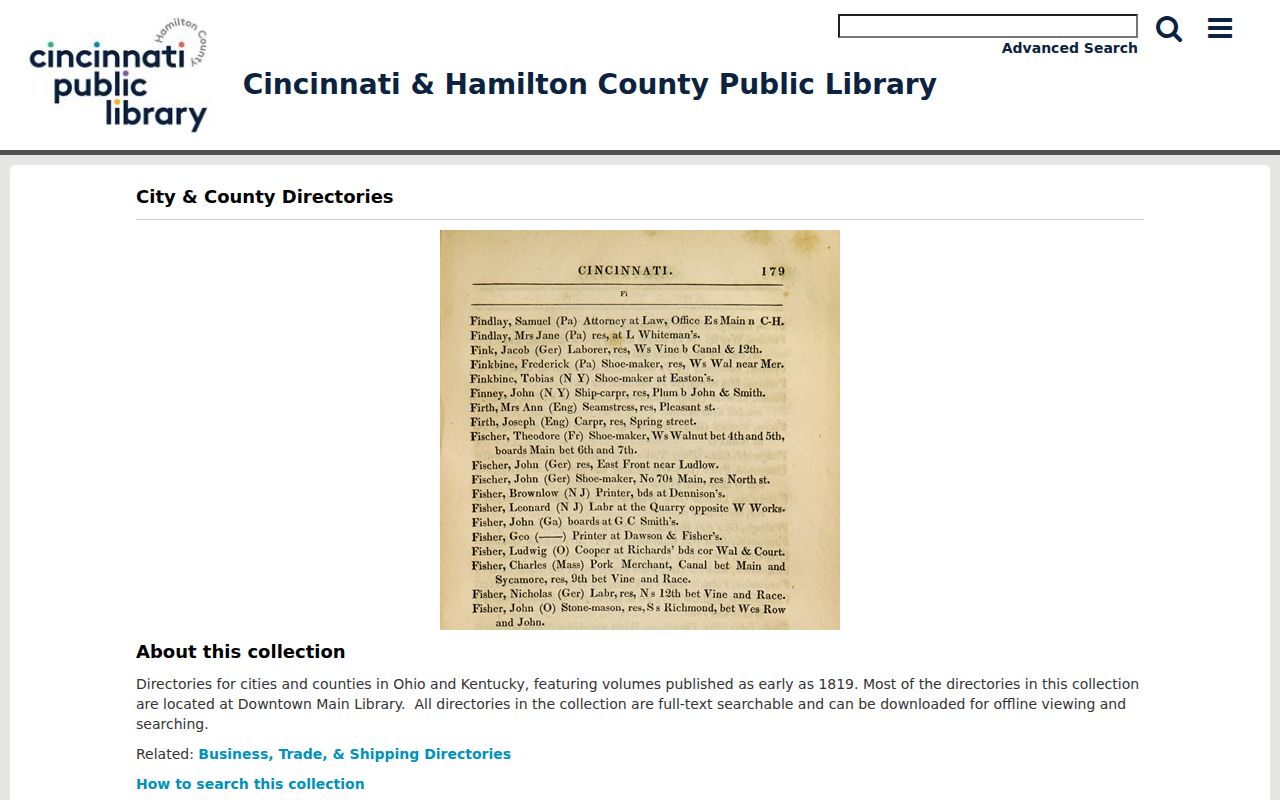
A collection landing page helps identify the right volume, but it does not establish that every listed address was inside Anderson Township at that time.
Hamilton County Directories for Township Addresses
CHPL describes Hamilton County directories as sources for homes and buildings, including prior residents’ names, occupations, and spouses. That makes them more useful for a township address than treating the Cincinnati series as automatic coverage. Search the surname in the alphabetic portion, then check the address portion when it exists. A name found in only one source is a lead, not a final conclusion about ownership or the full household.
For house history, CHPL pairs the directory layer with the Hamilton County Auditor and Recorder. The Auditor supplies a parcel, legal description, transfer date, and owner clue. The Recorder supplies the recorded deed trail. Those sources answer different questions, so a printed household name should never replace a deed or parcel record.
CHPL’s House History service sets out that combined route for researchers.
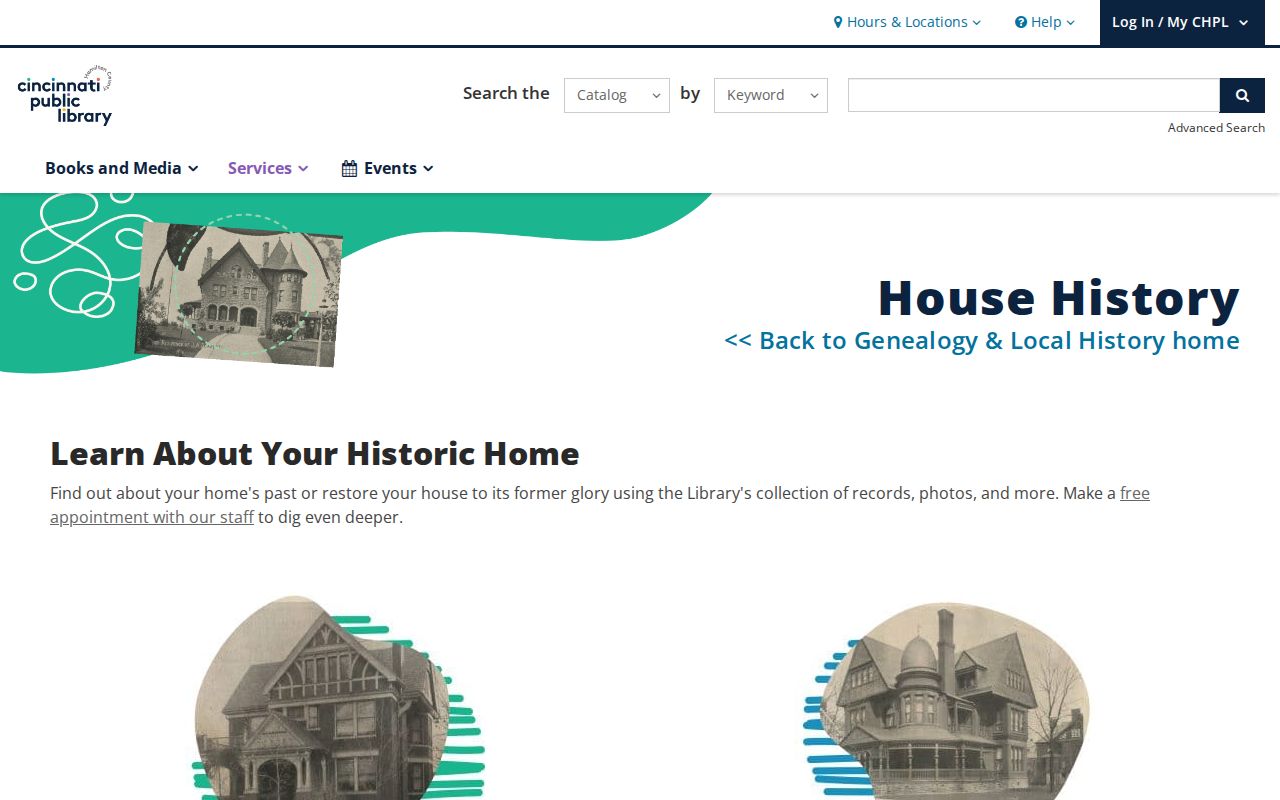
The library’s house-history route is especially useful once an address has been normalized with its subdivision, lot, or legal description.
Reading Anderson Township City Directory Entries
A directory entry is a dated printed listing, not a modern identity record. CHPL identifies the usable facts as the name, spouse, occupation, and street address, with owner or renter status where the volume prints it. Copy the name exactly, including initials and spelling variations. Then preserve the directory year, title page, page or image number, and the volume’s own abbreviation key. Later listings may carry fewer household details because expanded telephone listing practices displaced some information after 1950.
| Name as printed | Compare initials, middle initials, and alternate spellings in adjacent volumes. |
|---|---|
| Address | Keep the number and street format, and note whether it came from a name or address section. |
| Status mark | Use owner or renter wording only when the particular volume actually prints it. |
| Spouse and occupation | Helpful identity clues that should be compared with the same facts in nearby years. |
| Source detail | Record the year, title, page or image, and front-matter abbreviations for later checking. |
- Criss-cross directory
- An address-first directory section that places streets in alphabetical order and addresses in sequence.
- Householder index
- A name-oriented listing that may point to one printed household contact rather than every person at the address.
- Abbreviation key
- The volume’s front-matter explanation of its marks. Check it before interpreting a status or relationship notation.
Note: A directory listing can show that a person was printed at an address in a given volume, not that the person owned it or that no one else lived there.
Pink Pages for Anderson Township Addresses
Pink Pages began in 1925 and changed to the Criss-Cross Directory name by 1941. Their value is direction: an address can be looked up without first knowing an owner or resident. For an Anderson Township house, use the Hamilton County address route first, record the street spelling and printed number, and then compare the same location in nearby volumes. The result may reveal a listed occupant or owner, but it still needs a deed, parcel, or census comparison before it becomes a house-history finding.
Street numbers can be the weak link. CHPL notes a broad Cincinnati street-number change in 1895, with old numbers visible on 1891 Sanborn maps and new ones visible by 1904. That is a Cincinnati-core caution, not a blanket Anderson Township renumbering claim. Confirm a township address with its dated map, plat, subdivision, or legal description before carrying an old number across a boundary.
CHPL Access for Anderson Township City Directories
CHPL Genealogy and Local History is at the Downtown Main Library, 800 Vine Street, Cincinnati. The department offers specialized reference help and free appointments, and its general number is 513-369-6909. Its collection links the directory search to maps, local-history indexing, newspapers, obituaries, and the Joseph S. Stern Jr. Cincinnati Room. When a digitized volume has a gap or a result needs context, ask staff for the print, database, or archival alternative.
Some research tools are location-limited. Ancestry Library Edition is available at one of CHPL’s 41 branches on a library computer or library Wi-Fi. Since March 2025, all 41 locations are FamilySearch Affiliate Libraries, providing additional material to a signed-in user on library equipment or Wi-Fi. Other resources have their own branch or account rules.
CHPL’s genealogy databases describe the available access paths.
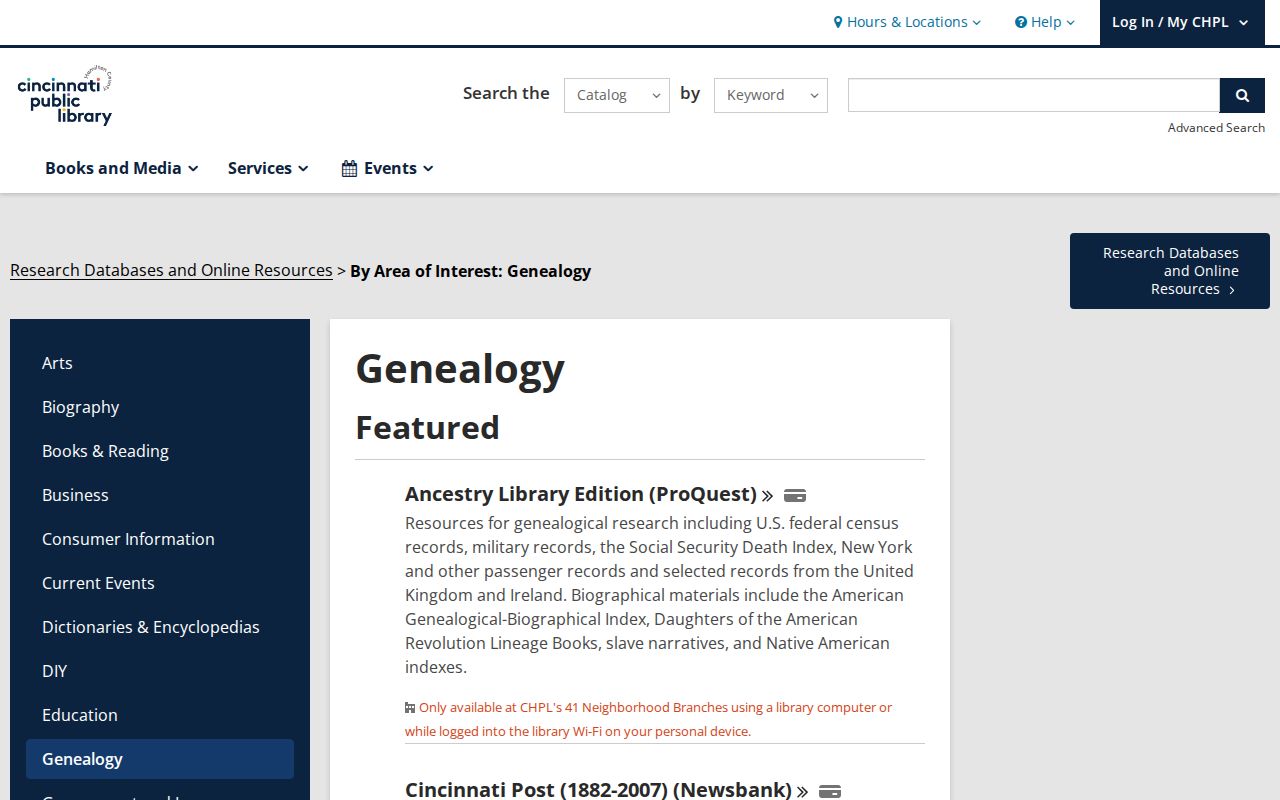
Using a branch or staff appointment supplies a real fallback when an online image, directory year, or historic index is unavailable at home.
Cincinnati City Directory Coverage From 1819
Cincinnati City Directories are searchable back to 1819. Their entries can include owner or renter names, spouses, occupations, and streets. That long regional run can illuminate an Anderson Township family trail, but it should not be promoted as proof that each early township address appears there. Postal names, municipal boundaries, and the geography of the particular volume matter. Capture the directory year and a dated map boundary before assigning an address to Anderson Township, Cincinnati, Newtown, or another nearby jurisdiction.
- 1819: CHPL identifies the beginning of its searchable Cincinnati City Directories.
- 1925: Pink Pages began the documented address-first research route.
- 1941: The Pink Pages name had become Criss-Cross Directory.
- 1950: The released federal census provides the latest public census point identified for this research.
Use a missing name carefully. It may mean a move, a publisher’s coverage choice, an alternate spelling, a household not included in that section, or a volume gap. It does not by itself prove an absence from the area.
Trace Anderson Township City Directory Households
Household tracing works best as a dated comparison. Start with the address and person together, then keep separate notes for title evidence, printed listing evidence, and census evidence. The process is helpful for family history and for understanding a house, yet it keeps a renter, owner, spouse, adult child, and boarder from being collapsed into one role.
- Normalize the address with its current number, street, jurisdiction, ZIP, Auditor parcel number, subdivision or lot, and any prior street name or number.
- Locate the address in a 1925 or later Pink Pages, Criss-Cross, or comparable Hamilton County address directory and record the volume year and printed spelling.
- Search the listed name in nearby volumes, comparing spouse, occupation, and address instead of relying on a surname alone.
- Pair the directory year with the closest federal census year. Census material after 1850 can name household members, ages, children, and boarders.
- Test a directory-name change against the Auditor and Recorder transfer clues, then use newspaper, obituary, or probate evidence to explain an endpoint.
For the property portion of the investigation, the previous residents trail follows the recorded chain backward without treating a directory entry as title proof.
Anderson Township Records Gaps and Fires
Hamilton County courthouse fires in 1813, 1849, and 1884 destroyed some records. They are a warning about survival, not evidence that a household or property did not exist. Ask the Recorder, library, or archive about reconstructed indexes, historic deed books, tax duplicates, newspaper notices, and alternate copies. The Recorder’s historic menu also separates modern search from older books and indexes, so a current portal result is never a complete statement of the county’s historical record.
The Cincinnati History Library & Archives is a context source for local photographs, maps, drawings, manuscripts, and development history after a collection or call number is confirmed. Public research access is appointment-only Thursday and Friday, noon to 4 p.m., and off-site material may not arrive the same day.
Collection details are available from the Cincinnati History Library & Archives.

Archive material can explain a neighborhood or building, while the Recorder and Auditor remain the sources for official property records.
Anderson Township Archives and University Records
The Anderson Township Historical Society research archives accept local genealogy, newspaper, and history inquiries by appointment. The Anderson History Room is a Township and Historical Society collaboration, useful for local interpretation but not a certified-record office. Contact the historical organization before visiting, because its exact archival series and research policy should be confirmed for the question at hand.
The Anderson Township Historical Society research archives provide a local inquiry route.
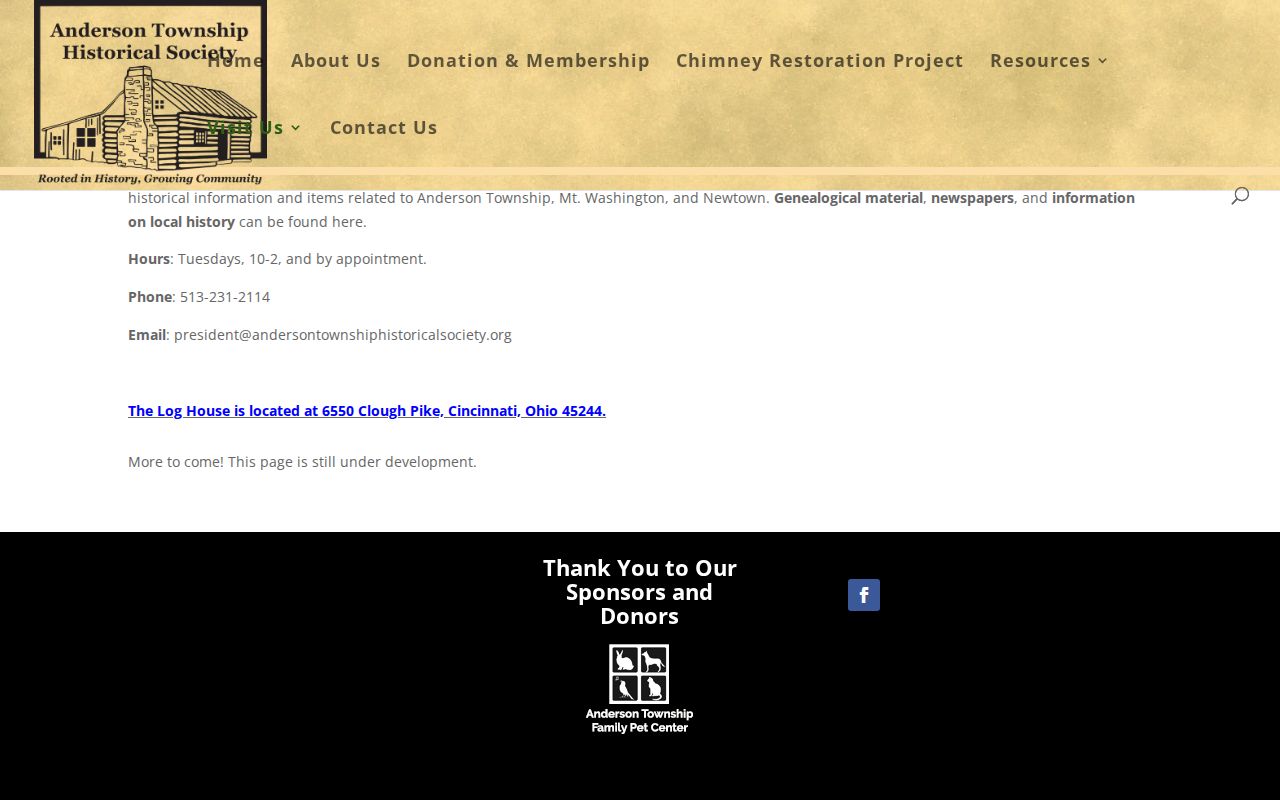
Local archival leads can bridge a directory name to a neighborhood story, but they do not replace a dated public record.
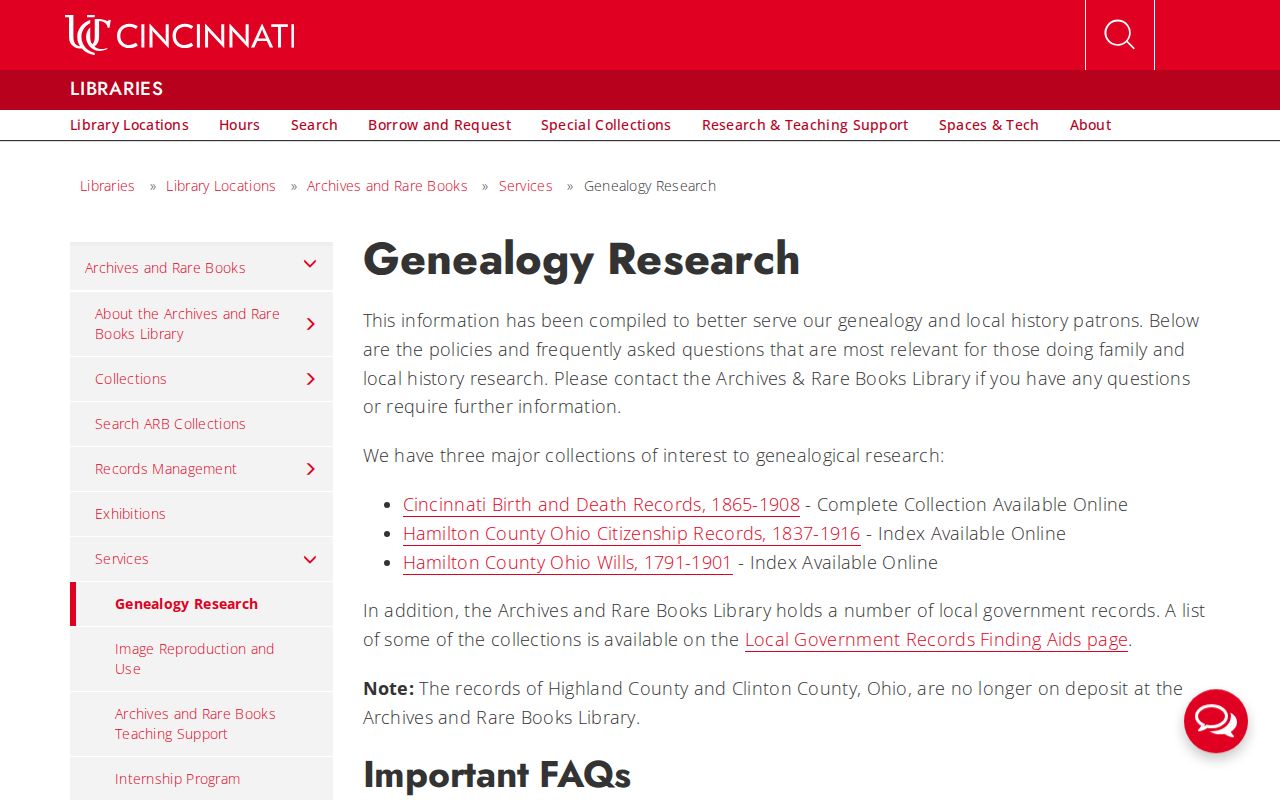
University of Cincinnati Archives has searchable Hamilton County wills for 1791 to 1901 and citizenship records for 1837 to 1916; it also holds Cincinnati-city birth and death records for 1865 to 1908. Appointment is required, remote retrieval can take one to two weeks, and copies are listed at $0.25 per page. Its Cincinnati-city vital series is not a complete Anderson Township collection.
Review access terms with University of Cincinnati genealogy services.
UC adds focused archival context when its collection dates fit the question and the appropriate county custodian has been checked first.