
Anderson Township Previous Residents by Era
A strong address history uses sources that overlap in time. The Auditor is the starting point for a current parcel and its legal clues. The Recorder carries the conveyance trail backward. CHPL’s directories and federal census material show a different kind of evidence: a person or household associated with the address at the time a volume or census was created. The table distinguishes the official land record from the historical household sources.
| Source | Years It Covers | Where Held | What It Shows |
|---|---|---|---|
| Auditor property workflow | 1937 to present, per CHPL | Hamilton County Auditor portal or counter | Parcel, legal description, transfer date, owner, and property clues. |
| Recorder deeds | 1789 to present, per CHPL | Hamilton County Recorder, Acclaim, or counter | Recorded conveyances, parties, instrument details, and legal descriptions. |
| Historic deed books and indexes | Books 1794 to 1903; indexes 1794 to 1930 | Recorder historic-records route | Earlier chain research by book, index, grantor, and grantee. |
| Grantor and grantee index | 1914 to 1988 | Hamilton County Recorder | Name bridge across recorded transfers. |
| Pink Pages and Criss-Cross | 1925 start; name used by 1941 | CHPL | Address-to-occupant route, subject to volume coverage. |
| U.S. federal census | 1790 to 1950 | CHPL and federal census resources | Household composition, ages, relationships, and date-specific context. |
Use the current parcel when the question begins with a house. Use the Recorder before 1937, not as an assumed end point, because the Auditor and Recorder have different historical coverage.
Begin Anderson Township Previous Residents With a Parcel
Open the Hamilton County Auditor Property Search and search the precise street address. The address mode accepts a house number and bare street name, without a street suffix. Save the parcel number or property key, current owner field, transfer date, book and page if supplied, short legal description, subdivision, lot, and tax district. Those identifiers are more durable than a street number when a tract was split, a development gained a new street, or an older record uses township, range, and section language.
A situs address identifies the parcel location. An owner mailing address is for notices and may be somewhere else. The latter can be a useful correspondence clue but is not proof of who lived at the property. Capture the search date as well, because parcel data and ownership fields can change.
For later life-event or certificate questions, the Ohio Vital Statistics route provides the state’s live forms and access information.
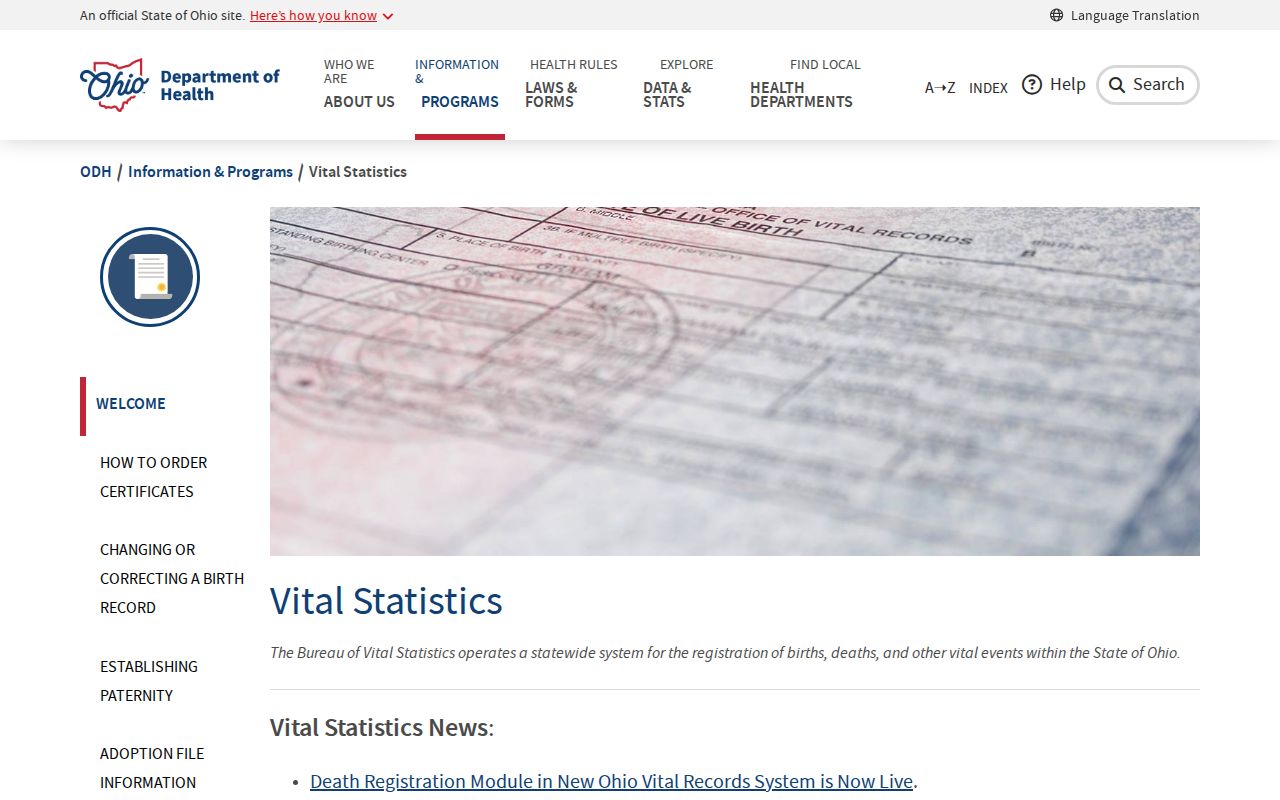
Vital records may help confirm a documented event, but a certificate process is not an address-directory search and is subject to record-specific rules.
Trace Past Owners Through Hamilton County Deeds
The Hamilton County Recorder holds the official land-instrument layer. Its Acclaim index allows name, date, document number, book and page, subdivision and lot, section-town-range, and Auditor-number routes. A deed identifies a recorded transaction; it does not automatically identify everyone who lived in the house. Follow the same legal description or subdivision and lot through every connection so that a similar street name or family surname does not create a false chain.
- Search the current address in Auditor Property Search; record the precise parcel number or property key, owner, transfer date, book and page, and legal description. Save the date and time because data updates.
- Submit the Auditor number to Recorder Acclaim, or use the transfer book, page, or document number. If the instrument identifies a seller or grantor and buyer or grantee, record both roles and the deed date.
- For the prior link, search the earlier owner as a grantee, the person who acquired title, and pair that result with the same legal description, subdivision, or lot. Do not rely on an old street address alone.
- Continue the seller-as-grantee and buyer-as-grantee steps, checking the legal description and any plat at every link. Preserve every named party when an estate or multi-owner transfer appears.
- When the modern index route ends, move to the Recorder’s historic deed books and indexes rather than guessing at a cutoff. Call or visit for a non-digitized book or image.
- At each ownership interval, pair the right address directory and census source. A listed resident, a parcel owner, and a census household can each tell a different part of the story.
Acclaim launched as the Recorder’s new public document search in July 2025. Its menus and visible details can change, and the Recorder reported a temporary 2026 display limitation on submitter mailback information. Index and document-image coverage vary by record series, so when a field matters, inspect the document image, ask the counter, or obtain the official copy.
Grantor and Grantee in Anderson Records
The words in a deed index have a practical direction. A grantor transfers an interest, and a grantee receives one. The chain moves backward by using the person who acquired the property in a later deed to find that person’s earlier acquisition. The legal description is the control point because it follows the land through changing addresses and names.
- Grantor
- The party shown as transferring an interest in a recorded instrument.
- Grantee
- The party shown as receiving an interest in the recorded instrument.
- Chain of title
- The dated sequence of recorded transfers connected by the same parcel or legal description.
- Legal description
- Subdivision, lot, block, or section-town-range language that identifies land beyond its street address.
- Enumeration district
- The census geographic area used to organize a particular enumeration, useful when pairing a census with an address.
Note: A document index can contain omissions or display limits; compare the indexed fields with the image or counter record before relying on spelling, land description, or transfer type.
1937 Auditor Data Meets Older Recorder Sources
CHPL’s house-history guidance places Auditor property data from 1937 forward and directs earlier work to the Recorder. That is an era bridge, not a claim that records begin in 1937. The Recorder’s deed trail reaches 1789 according to CHPL, while its documented historic deed books start in 1794 and the historic indexes run through 1930. The grantor-grantee index labeled 1914 to 1988 helps span later transfers, but no single online view should be presented as every record for the parcel.
Anderson Township was founded in 1793 and later boundary and annexation changes affect address history. Newer subdivisions can make the recorded plat, lot, and legal description steadier anchors than an informal old house number. Keep a small era ledger with address variations, parcel identifiers, each party pair, execution and recording dates when shown, book or instrument references, and the directory or census year used for comparison.
Anderson Township Previous Residents in Directories
Ownership is only one part of a house history. Pink Pages began in 1925 and let a researcher look up an address without a name; by 1941 that address-first method was called the Criss-Cross Directory. Search an Anderson address first in the Hamilton County material, record the volume year and printed spelling, and look at nearby volumes for change. The historical collection details live with the Anderson Township city directory collections, rather than being repeated as a substitute for the deed chain.
Pair each directory year with the nearest federal census. The census can name household members, ages, and relationships at its own date, while an address directory can show a printed name at a different date. Use an Auditor transfer date and a recorded instrument to test whether a changed directory name reflects a conveyance, a new listing, or a different household situation.
- Place the directory volume and printed address in the parcel ledger.
- Compare a nearby directory year for the same address and spelling.
- Find the closest census record and save its enumeration date and geographic context.
- Check the recorded transfer interval before drawing a conclusion about ownership.
- Use newspaper, obituary, or probate material only as a dated supporting source.
Probate and Newspapers Close Address Gaps
When a directory trail ends, an obituary, newspaper notice, or probate file may explain a death, estate, or move. CHPL’s Newspaper Archive covers historical Ohio newspapers from 1800 to 2019, and Newsdex gives citations to Cincinnati-area stories, death notices, and obituaries. A citation is a lead to the newspaper item, not the full underlying report. Use dates and source references rather than treating an obituary alone as title evidence.
Hamilton County Probate Court handles estates, wills filed in probate, guardianships, marriage licenses, name changes, and related matters. Sensitive categories have restrictions. A probate docket or filed document can establish a formal estate connection, but it must be read in context and confirmed through the court’s record route.
The Hamilton County Probate Court is the official starting point for those court records.
Probate evidence can help explain an estate transfer, while the Recorder supplies the land document that establishes the recorded conveyance.
For a marriage-related endpoint, use the court’s live marriage-license information and its copy process rather than assuming an index is a certified document.
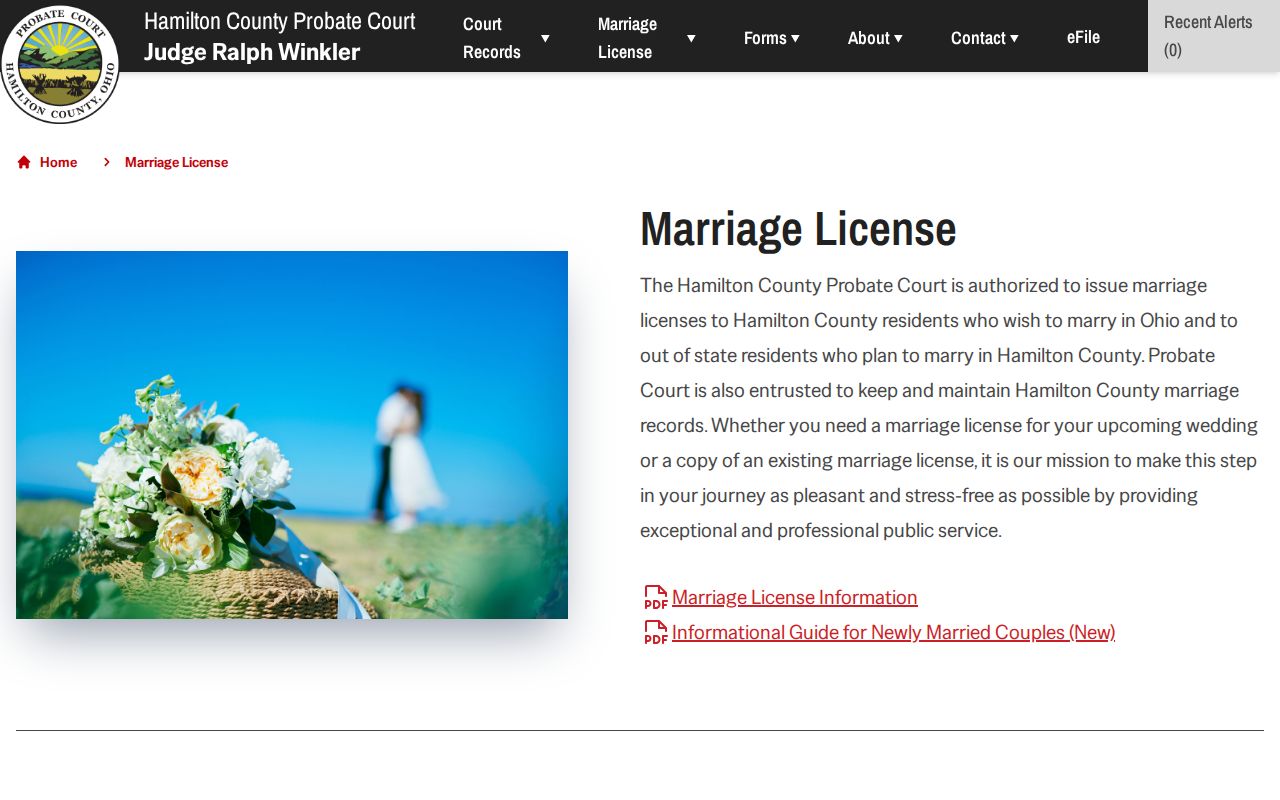
A marriage record can support a family-history timeline, but it does not establish an address history without the dated records that connect it to the property.
Anderson Township Courthouse Fire Gaps
Hamilton County courthouse fires in 1813, 1849, and 1884 destroyed some records. They signal a need to search alternate and reconstructed sources, not a conclusion that a household or parcel was absent. Ask the Recorder about historic deed books, indexes, plats, tax duplicates, and other surviving series. Ask CHPL, University of Cincinnati Archives, the Cincinnati History Library & Archives, or the Anderson Historical Society for contextual collections only after identifying the date and jurisdiction that fit the question.
Cincinnati’s broad street-number change in 1895 is another records warning. The 1891 Sanborn maps show old numbers and 1904 maps show new numbers in Cincinnati. Do not apply that change automatically to Anderson Township. Verify the particular address against a dated plat or map, then reconnect it with the legal description.
Lawful Anderson Township House History
Previous residents research is best kept to family history, house history, estate questions, civic records, and personal curiosity. It is not a reason to contact, track, expose, or harass a living person. Ohio Public Records Act, ORC 149.43, gives a route to nonexempt public records and allows inspection, but it does not remove privacy protections, sealed records, statutory redactions, or address confidentiality rules.
Use records carefully. Keep a source log and request a focused record category, address or parcel, date range, and inspection or copy method. Verify key facts with the office that holds the record, and do not use historical research to harm anyone.
When an online record stops, use the counter or copy desk, CHPL’s free house-history appointment, the Recorder’s historic books, or a focused request to the relevant Township department. That documented fallback chain is more reliable than filling a gap with an assumption.